Employee suggestion responses

Responding to employee suggestions: 6 examples you can copy.

People stop suggesting when they never hear back. Use these six replies to answer fast, explain the decision and say what happens next, even when the answer is no.

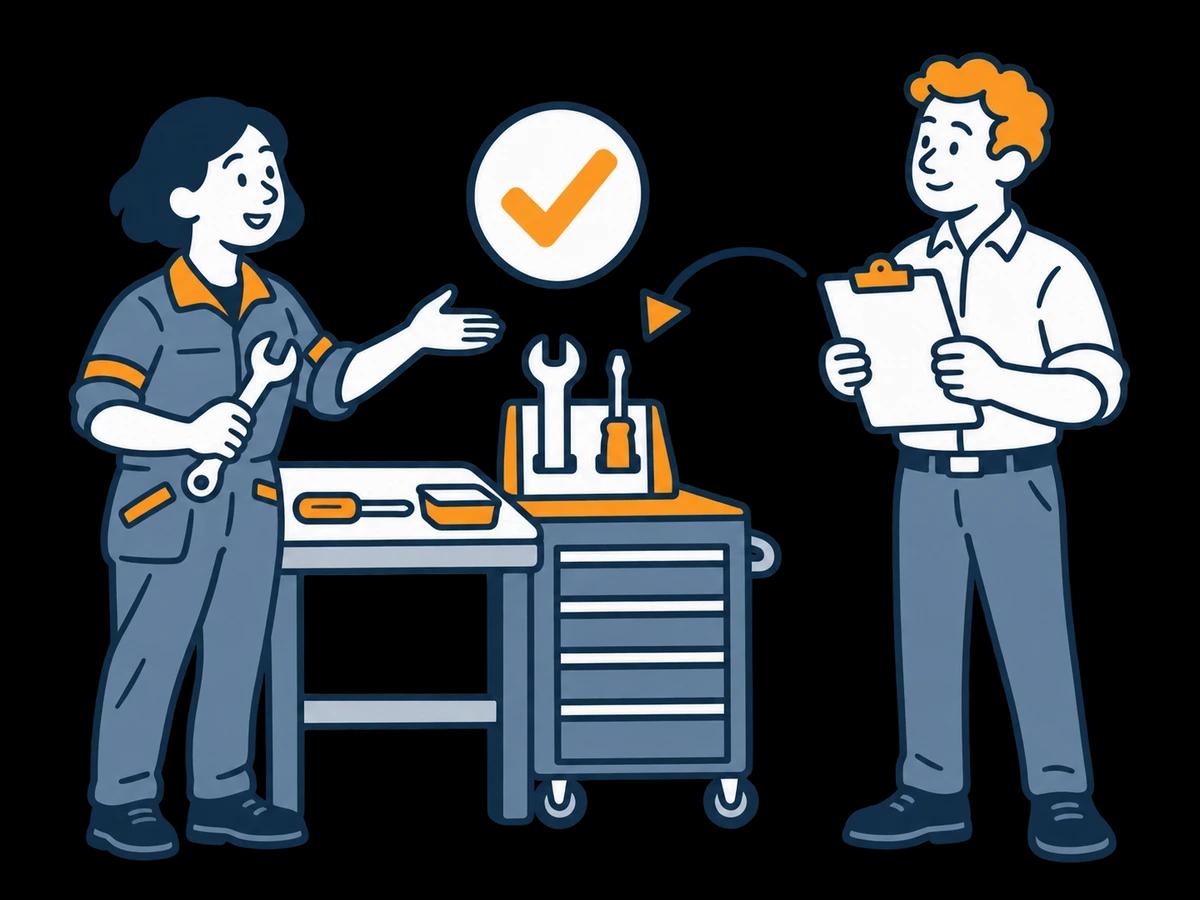
Illustration of colleagues discussing the outcome of a workplace suggestion.

Six replies to adapt

Copy the wording, then add your facts.

Swap each [placeholder] for a real person, date or channel your team has agreed. Only promise what you can keep.

Send the reply through your usual channel and keep the same decision and next step with the idea, so everyone works from one record.

When the idea arrives or needs a question.

Response 1 / 6

Confirm you received it

The idea has arrived and still needs a review.

Thanks for flagging the gauge storage problem at [work area]. Your suggestion is logged. [Reviewer] will look at it on [review date] and tell you the decision via [feedback route].

Why it works: It names the problem and commits to a review date. Use a date and a route your team will actually keep.

Response 2 / 6

Ask for one missing detail

One missing fact is blocking the decision.

Your suggestion makes the storage problem clear. Which gauge and station were involved the last time it happened? That helps Production test the new spot with the operators who use it.

Why it works: It explains why you are asking, instead of sending a vague 'please add more detail'.

Illustration of a coordinator passing an approved idea to a department colleague through an email link.
Assign the next action to the team that can take it forward.

Before you promise

Agree the next step before you name an owner.

The person taking on the work needs to know the proposal and what follow-up is expected. Settle that handover before you tell the employee who is on it.

When you approve or decline.

Response 3 / 6

Approve a test and name the owner

The team has agreed to try the change.

Good news: we're testing the marked storage spot. [Department] will set it up with the operators at [station]. The next step is [action], and [reviewer] will check the result on [date]. We'll record progress on this idea.

Why it works: It separates approval from completion and says who does what next.

Response 4 / 6

Decline with a reason

The specific change can't go ahead.

Thanks for pointing out the extra packing space. We can't remove the protective insert because this product's packing standard requires it. Logistics will check whether an approved alternative box solves the empty space. [Owner] will update you via [route].

Why it works: It explains the constraint, values the observation and keeps a possible alternative open.

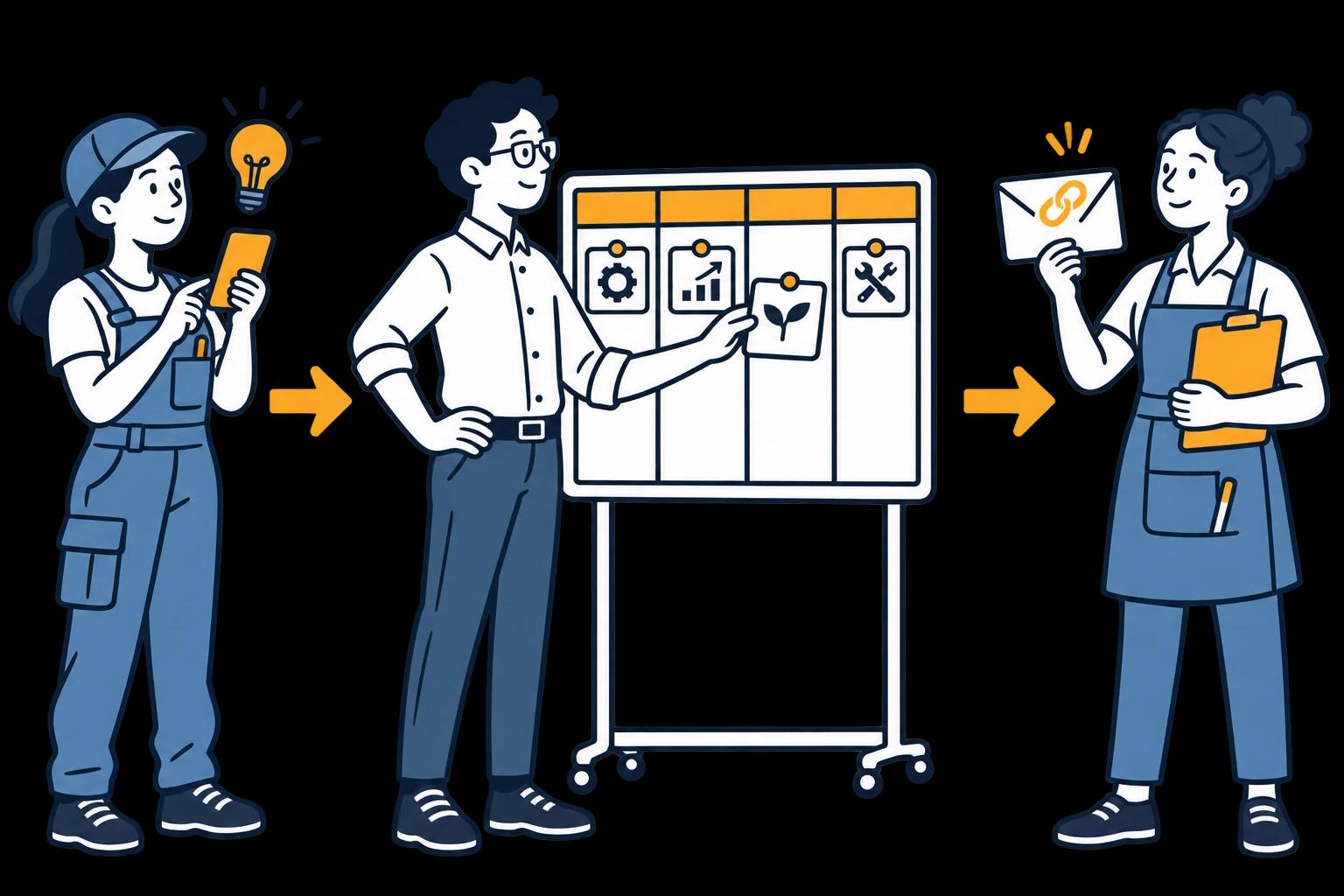
Illustration of an employee submitting an idea, a coordinator reviewing a board and a department colleague holding an update link.
Three jobs in the process: submit, manage and update assigned work.

Decision and reply match

Say what is closed and what is still open.

A declined proposal can still lead to a different fix. Make that clear, so the employee knows what is closed and what the team is still looking at.

When the work is delayed or done.

Response 5 / 6

Explain a delay

The next step depends on something that hasn't happened yet.

Your fixture shelf idea is still open. We're waiting for [dependency] before we pick the position. [Owner] will look at it again on [date] and update you, even if we're still waiting.

Why it works: It gives a real reason and a new date. Only promise a date the named person has agreed to.

Response 6 / 6

Close the loop when it's done

The change is in place and the team has checked it.

The new fixture labels are up at [location]. The team checked them by [actual check] and saw [observed result]. Thanks for raising it. If a label is still unclear in use, tell [contact or route] and we'll take another look.

Why it works: It reports what was checked and what the team saw, without an invented saving.

Illustration of colleagues reviewing an improvement at the work area.
Check the result before you write the completion message.

A result people recognise

Describe the check, not a saving you haven’t measured.

Say what changed and how the team checked it. If you report a saving, keep the baseline and the calculation with it. Otherwise, describe what you saw in plain words.

Put a process behind every reply.

The replies were written by the IdeaKanban team. They draw on CIPD’s guidance on two-way employee voice: managers need to listen and act on what they hear, not just offer a place to submit.

Try it with your team

Give your next idea a place to start.

Create your own workspace and try Business free for 30 days. No credit card needed to start.

Try interactive demo