Implementation guides
How to Implement an Idea Management System in 7 Steps
Seven steps, one worked example and a 30-day rollout plan that take your first team from the first suggestion to a finished change.
Published by the makers of IdeaKanban. See sources and how this guide was prepared.

Most idea management systems don't fail because of the software. They stall in week three, when the first suggestions sit unanswered and nobody knows who should act. Want to know how to implement an idea management system that keeps running after launch? Start small. You need one team, one person who reviews ideas and a tested route from an employee's phone to a finished change.
This guide gives you seven steps, a 30-day rollout plan, a review agenda and a free printable pilot pack. Each step ends with what you should have in hand before you move on.
Read the transcript
Most idea management systems don't fail because of the software. They stall in week three, when the first suggestions sit unanswered. Here's how to launch one that keeps running, in seven steps and thirty days. One. Pick one pilot team and a goal you can check: every suggestion gets a decision. Two. Give three jobs a name: a sponsor, an idea coordinator, and an owner for every approved idea. Three. Agree what each stage means. New. Approved. In progress. Done. Four. Test the whole route with one real idea: from a phone, to the board, to the department. Five. Launch it in a normal team meeting. Show the QR code, and say when people will hear back. Six. Review new ideas every week, and give everyone a first answer within seven days. Seven. After thirty days, decide: keep, adjust or expand. Judge by what happened to the ideas, not by how many arrived. Try the whole route yourself in the live demo. No signup needed. IdeaKanban. From idea to done.
Pressing play loads the video from Vimeo. Privacy policy
How to implement an idea management system: follow one suggestion
The quickest way to test a process is to push one suggestion all the way through it. In this guide, that suggestion comes from an assembly team.
The team shares one tool trolley. It stands against the wall, a few metres from station 3. Several times a shift, someone walks over to fetch a torque wrench and walks back. One operator suggests a marked spot right beside the station.
Simple enough. But someone has to review the idea, agree who takes it on, try the new spot and tell the operator what happened. That is the whole job of an idea management system. Each of the seven steps below moves the trolley idea one stage further.
Running a small company? One person can hold several roles. Agree a fixed review time, a backup for when the coordinator is away and who can accept the next action. Our small-business use case shows this routine. The implementation guide collection brings all the supporting resources together.
01. Choose one pilot team and a goal you can check

Pick one work area with everyday problems worth fixing and a manager who wants to review ideas. An assembly team, a packing station or a single department is a good size.
Then write a goal your coordinator can check. For the assembly team: “Every suggestion gets a recorded decision. Every approved idea gets an owner and an implementation update.” Agree now how you will check it at the end of the pilot.
“Become more innovative” is not a goal you can check. “Every suggestion gets an answer” is. Keep the first test small on purpose: ASQ's Plan-Do-Check-Act guidance recommends testing a change on a small scale, reviewing what happens and applying what you learn.
Leave this step withOne pilot team, a written goal and a date for the first review.
02. Give three jobs a named owner

Put a name against each job below before you ask for a single suggestion. In a small business, one person may cover two jobs. The handover still has to be clear.
For the trolley idea, the coordinator reviews the suggestion and Production accepts the next action. Decide who walks the line with the operators, tests the new spot and reports back.
In IdeaKanban, Idea Managers run the board and assign approved ideas to a department. The department gets an email with a secure link to add updates, photos and progress. Only Idea Managers need a login.
Leave this step withA named sponsor and coordinator, plus an implementation owner for every approved idea.
Write the names into a one-page pilot brief. Here is the brief for the assembly team. Copy the structure, then replace every line with your own names and dates.
03. Define what happens to every suggestion

Agree what each stage means before you touch any settings. Anyone who opens an idea should see its status and the next action at a glance.
A useful approval for the trolley idea reads: “Production will try a labelled trolley spot beside station 3 for two weeks and ask the operators whether it helps.” The receiving team knows exactly what to do next.
Decide up front how you handle duplicates, open questions and ideas you decline. Give a reason people can understand, and agree how it reaches them.
Leave this step withOne shared meaning for each stage, and a clear next action after every approval.
One idea. Four clear next steps.
- New
Read the suggestion and clarify the problem.
- Approved
Agree who takes it forward and the next action.
- In Progress
Try the change and keep the idea updated.
- Done
Record the outcome and explain what changed.
These are IdeaKanban’s four main stages. Ideas you decline move to Discarded, so agree how you handle duplicates and open questions too.
Saying no is part of the idea management process too. A good “no” closes the proposal, not the problem behind it.
For eight filled-in cards to discuss with your team, see the continuous improvement idea board with production and office examples.
04. Set up the software and test one idea end to end
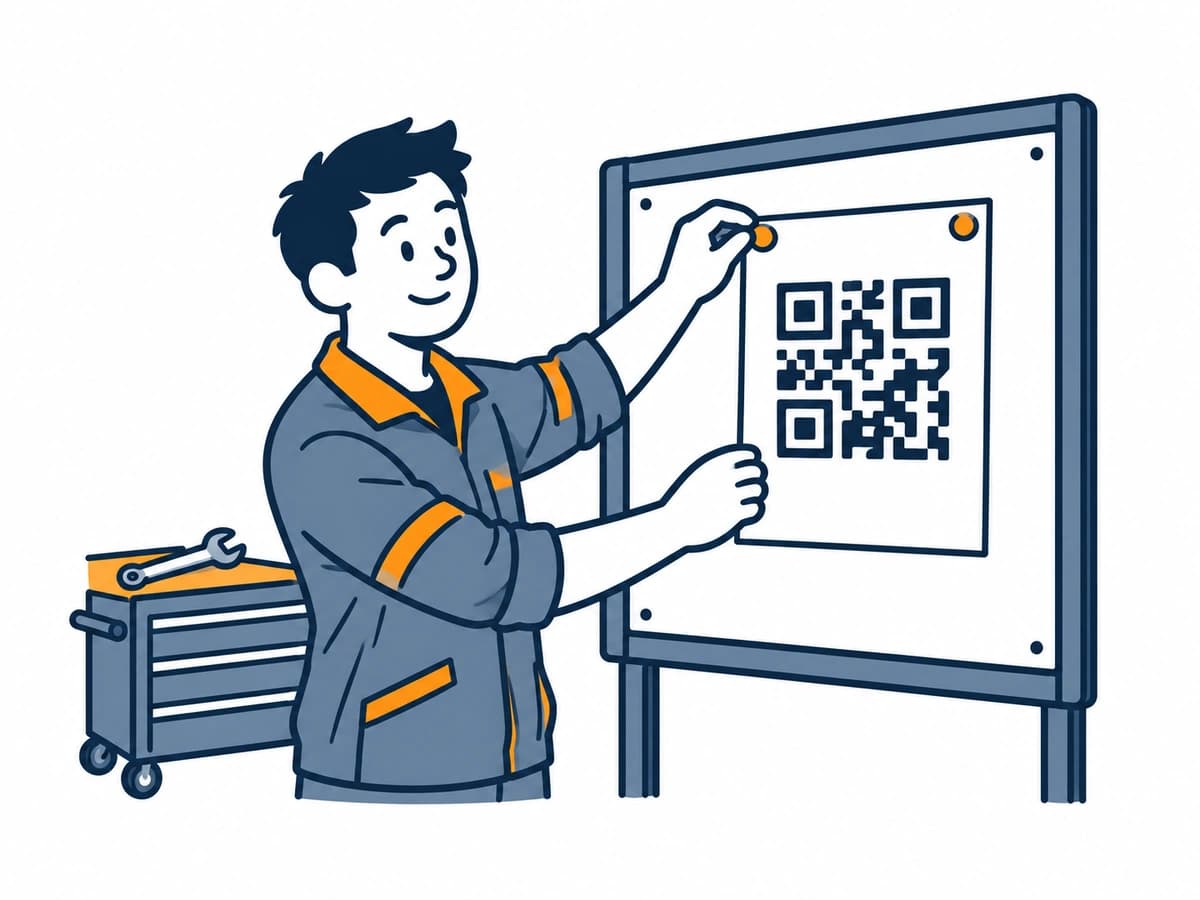
Create the workspace, choose your Idea Managers and add departments with the email addresses that should receive assignments. Then print or share a test QR code.
Now run the trolley idea through with a colleague. Submit it from a phone, add a photo of the trolley, review it, assign Production and open the department's update link. Use the access your people really have, including colleagues without a company email account.
Our getting-started page walks you through the IdeaKanban setup, from creating the workspace to sharing your QR code.
Leave this step withOne suggestion submitted, reviewed, assigned and updated, using the access your team really has.
Want to see the board before you set anything up? Here is an idea moving across the public demo board. You can click through the same board in the free live demo, with sample data and no signup. Choose QR Code & Poster there to send a test idea from your own phone.
Still choosing a tool? The ideation management software guide gives you six checks for exactly this workflow. The small-business software guide compares account access, photos and follow-up. Moving from HYPE? The alternatives guide explains how the product scopes differ. Either way, go through your open suggestions first and decide how you will keep their history. Don't count on an automatic migration.
IdeaKanban Starter costs €39/month, billed annually, with unlimited submitted ideas and no setup fee. The pricing page lists the manager, department and board limits for each plan. The free Business trial lasts 30 days, just like this pilot. Start both on the same day, and you decide on the process and the plan together at the end.
05. Launch the employee suggestion program in a team meeting

Introduce the employee suggestion program in a normal team meeting, not a long presentation. Show the QR code, say who reviews ideas and explain how people will hear back. Then let one colleague submit an idea while everyone watches.
Your announcement can be this short:
Scan the QR code to describe a problem and the change you would make. Add a photo if it helps. We review ideas every Tuesday and aim to answer within seven days.
Pick a day and a response time you can really keep. Test the QR code before you print posters. Agree where feedback appears, for example as a standing point in the shift meeting.
Leave this step withA tested QR code, a short announcement and an agreed way to give feedback.
People keep suggesting when they see a response. CIPD's employee voice guidance stresses that management has to listen and act on what it hears. That includes people whose ideas are declined or need a follow-up question.
06. Review new ideas every week
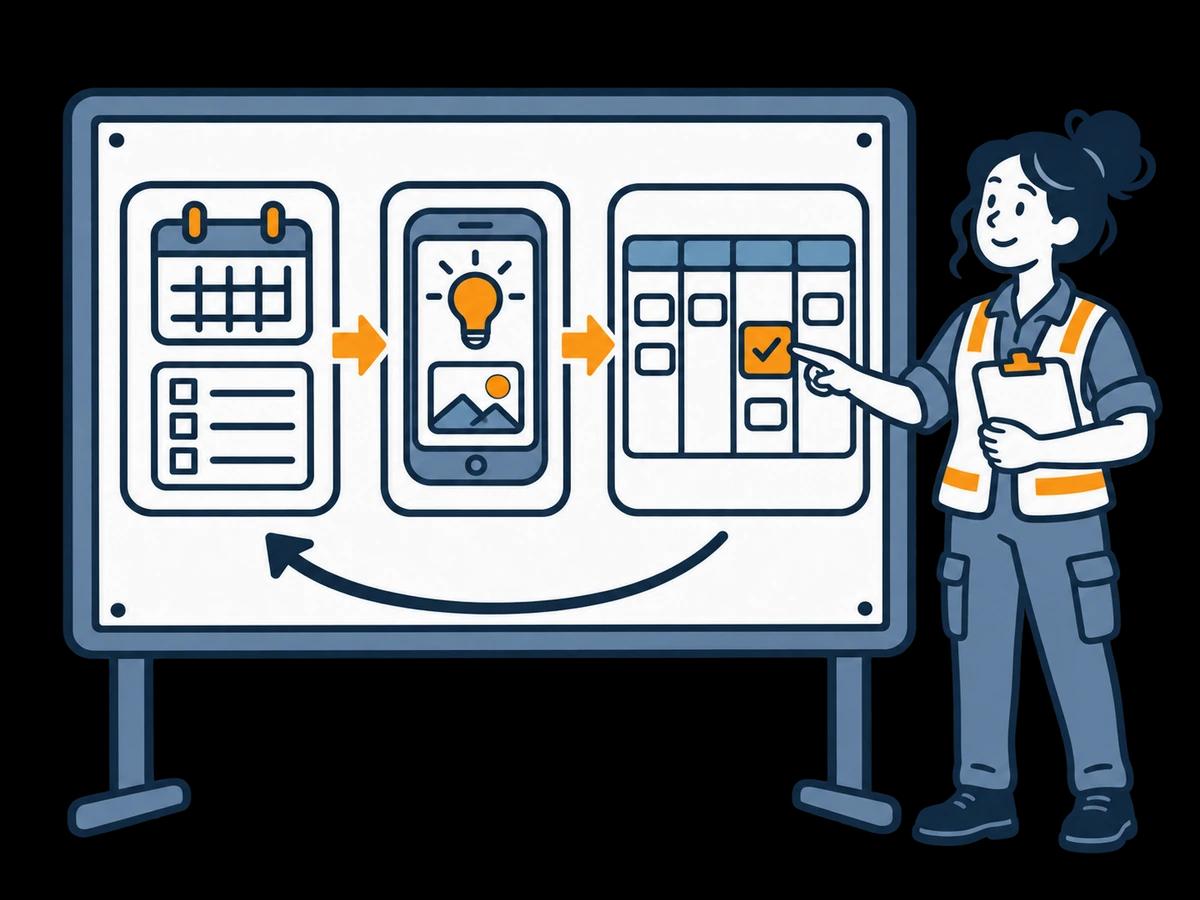
Block a regular review slot in the calendar and treat it like any other production meeting. Once a week is a good start. Adjust it to the number of ideas and the size of the changes.
In each review, ask three questions:
- Which ideas still need a decision?
- Which approved ideas have no owner who has agreed to act?
- Which active changes have no current next action?
Keep a short log for each idea: date received, first review, decision, owner, next action and outcome. For the trolley idea, record whether Production has accepted the trial and when the operators will give feedback.
Leave this step withA recorded decision for every idea, accepted handovers and a current next action for active changes.
07. Check the result before you expand
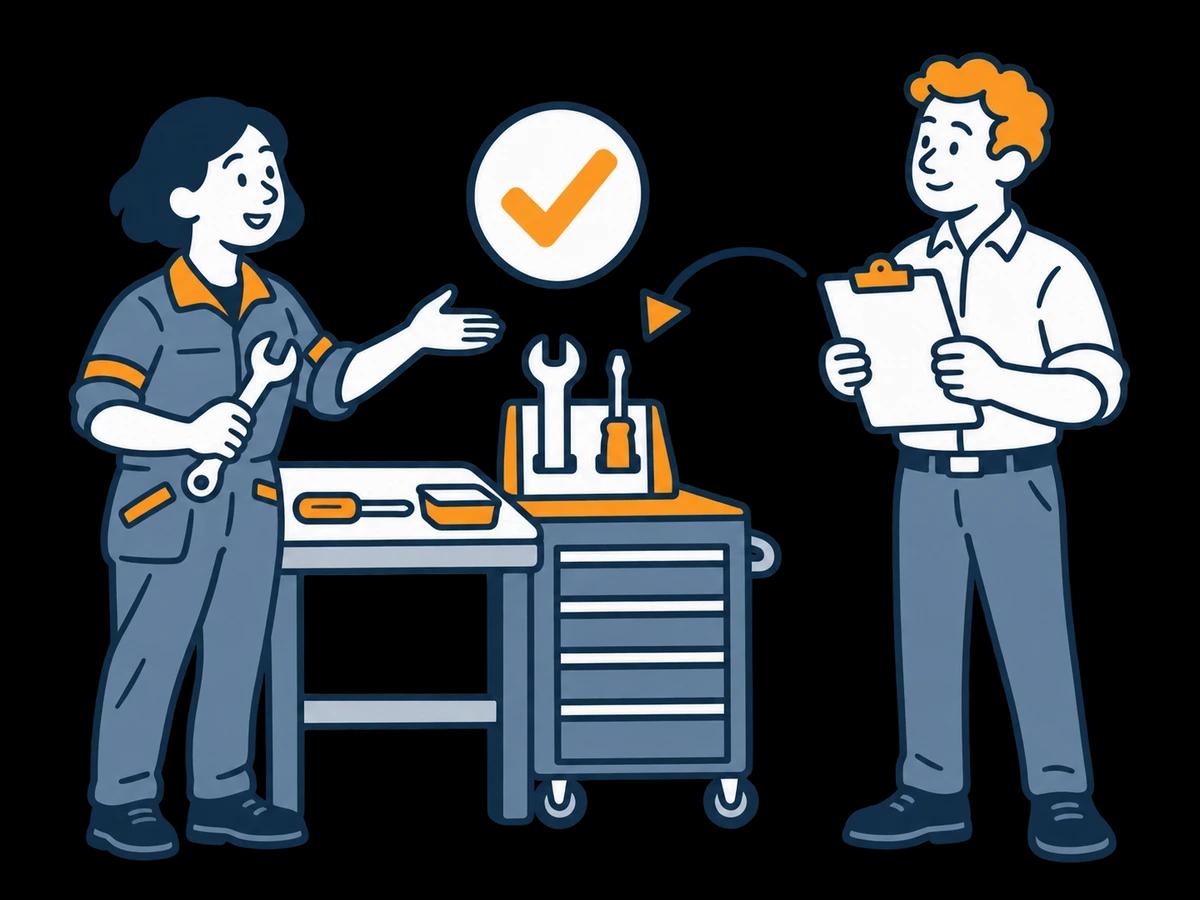
Go back to the station. After two weeks with the new trolley spot, ask the operators what helped, what got in the way and whether the spot should move again. Record the outcome on the idea.
Then check the process itself. Was submitting easy? Did Production get a clear handover? Did the operator hear back? Fix those gaps before you bring in a second team.
Finally, decide what to keep, adjust or expand. The Lean Enterprise Institute's Kaizen guidance describes improvement in small steps, made with the people who do the work. Apply the same principle to your suggestion process.
Leave this step withA decision to keep, adjust or expand, based on the pilot and on the people who do the work.
Turn the seven steps into a 30-day rollout plan
Here is how the steps fit into one month. Shift patterns, approvals and the changes themselves can stretch it, so treat the dates as a starting point. Some improvements will take longer than the pilot.
Your 30-day rollout plan
30 days. Four clear checkpoints.
- Days 1–7Prepare
Agree the goal, the three owners, the first review date and the QR route.
One pilot team, ready to go - Days 8–14Launch
Show one submission in a team meeting and test the full handover.
Real suggestions to review - Days 15–21Follow through
Review new ideas, assign owners and clear the first blockers.
Decisions and visible progress - Days 22–30Learn
Check response times, ownership and outcomes. Decide what to change.
Keep, adjust or expand
The plan includes preparation and evaluation. Start the free 30-day Business trial on day 1 and run the pilot inside it.
Run your first idea review with this agenda
Don't read every card aloud. Every item you discuss should end with an action or an explanation. The coordinator records the decision. The receiving team accepts the work. A name typed onto a card does not mean that person has agreed to act.
| Review | Ask | Leave a record of |
|---|---|---|
| New suggestions | Can we decide today? If not, which one missing detail stops us? | Decision or one specific question, who asks it and the reply date. |
| Approved work | Has the implementation owner accepted the next action? | Named owner, the agreed test and the date of the next update. |
| Blocked work | What is stopping progress, and who can clear it? | The blocker, who follows it up and the next review date. |
| Completed changes | What did people see after the change, and has the proposer heard the result? | What was checked, what was observed and how the feedback was given. |
If an owner can't take on an action, record the blocker and take it to the sponsor. For wording you can adapt, use the six employee suggestion response examples. The review-process guide covers follow-up questions, approval, decline, duplicates and deferral in more detail.
Check whether your idea management process works
Counting submissions tells you little. You need to see what happens after an idea arrives. Example: after the first weeks, the assembly pilot has 12 suggestions, all submitted at least seven days ago. Six have been approved.
Worked example · assembly pilot
What 12 suggestions tell you after the first weeks
9 of 12 suggestions had a first review within seven days of submission
5 of 6 approved ideas have an implementation owner who agreed to act
3 of 12 submitted suggestions have reached Done
Percentages are rounded. Each row names its own denominator, so use the same definitions when you compare periods.
Watch the denominators. Review coverage uses all 12 suggestions. Ownership coverage uses only the six approved ideas. Keep the same definitions when you compare one month with the next.
Then look behind the figures. An approved idea without an owner needs a handover. A slow change may need more time or resources. Record what really happened. If you report savings, state the baseline and how you calculated them. The IdeaKanban idea report shows submitted and completed ideas, plus the savings you recorded year to date.
At the end of the pilot, decide keep, adjust or expand, and write down why. If some employees still can't reach the form, or the team can't keep up with reviews, fix the process before you add another department. The percentages in this example are not targets or pass marks.
How to implement an idea management system: common questions
How long does it take to implement an idea management system?
Setting up the software and building the routine are two separate jobs. The IdeaKanban setup means creating a workspace, adding departments and sharing the QR code or link. The 30-day pilot gives you time to prepare, introduce the process and evaluate it. Your team or your changes may need longer.
Do all employees need an account?
No. Employees submit through a QR code or link in their phone's browser, without an account. Idea Managers log in to manage the board. Assigned departments update their ideas through a secure email link. Test each route with the access those people really have.
How many ideas should a pilot collect?
There is no universal target. You need enough useful suggestions to test the full route: a decision, an accepted handover and an implementation update. Also check whether the team keeps the response times it promised.
Can we bring our existing suggestion spreadsheet?
Go through the open items first. Remove duplicates, check which suggestions still need action and decide how to keep their context. Ask about transfer options when you choose software. This guide does not assume an automatic import.
Can we run the 30-day pilot during the free trial?
Yes, that is how they are meant to fit together. The pilot is your rollout plan; the free Business trial gives you your own workspace for the same 30 days. Start both on day 1, and the pilot decision and the plan decision fall on the same day.
Sources and approach
This guide is published by IdeaKanban. The seven steps, the 30-day plan and the review commitments are our practical recommendations for a small-business rollout. The tool-trolley example and the scorecard figures were created by the IdeaKanban team to show the process.
- ASQ: Plan-Do-Check-Act, including a small-scale test, review and further improvement.
- CIPD: Employee voice, including management response and two-way communication.
- Lean Enterprise Institute: Kaizen, involving people in incremental improvement.
- IdeaKanban: workflow, product setup, plans and trial and the public demo.
The step drawings are illustrations in the style of our How it works page. The recording shows the real public demo with demo data.